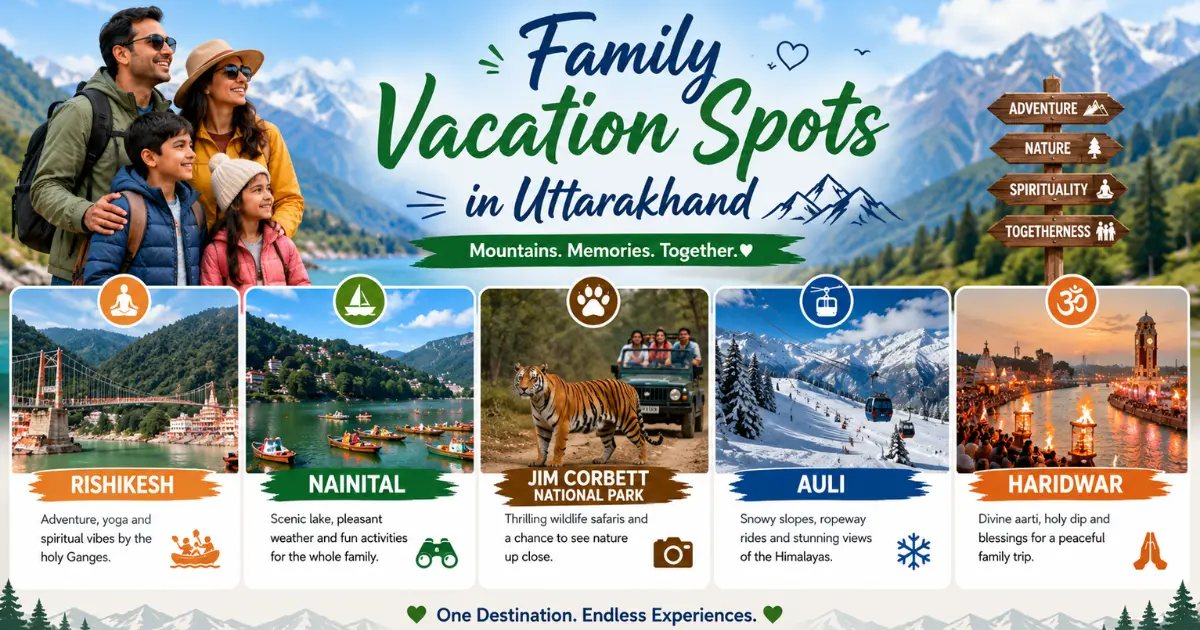
Because family travel is rarely simple. Grandparents want comfort. Teenagers want something interesting, and young kids need it to feel easy. Uttarakhand handles that balance better than most places. If you’re planning one trip that works for everyone, Uttarakhand is where you get different experiences. From the snow-capped Himalayas of Auli to the sacred ghats of Rishikesh, Uttarakhand offers India's most complete family escape, where everyone finds exactly what they came for.
Uttarakhand is one of those rare places that works for the whole family. Within a few hours, the landscape changes completely. Ancient temples, open Himalayan meadow, and dense forests full of wildlife pass in front of you. It’s called Dev Bhumi, the Land of the Gods. And it lives up to that name in quiet, believable ways. You can start low, in the forests of Jim Corbett National Park, which is warm, green, and full of life. Then head higher up toward places like Auli, where the air turns crisp, and the landscape opens into snowfields and wide mountain views.
What makes a family destination truly work isn’t a long list of things to do. That part is easy. What matters is something simpler, and harder. Can everyone enjoy it at the same time? Without constant adjustments. Without someone quietly giving in. That’s the real test. The places in Uttarakhand that are listed in this write-up are selected with that in mind. Not for variety but for depth. Each one gives you enough to do for four or five days without feeling repetitive. More importantly, they work across all age groups.
Uttarakhand works for families because everything stacks neatly. You don’t have to travel far to feel a real change. The experiences shift as you move up. One day, you’re in Rishikesh rafting on the Ganges. Fast, loud, a bit chaotic, in a good way. Slow it down, and you’re at a yoga ashram. The town is the same, but the pace is completely different. Then you head out into Jim Corbett National Park. There, you enjoy a jeep safari in a dense forest. Waiting, watching something might appear, or it might not. That’s part of it. And then, almost without trying too hard, you’re in Nainital, sitting by the lake or on a quiet boat ride without any rush. You’re not chasing experiences across long distances. You’re moving through them, one layer at a time.
The state is also far more accessible than comparable Himalayan destinations; it is within 300 kilometres of Delhi, well connected by rail to Haridwar and Kathgodam, and has a functioning road network that reaches most tourist centres without requiring extreme driving conditions. That matters enormously when you have young children or elderly family members in the group. Here are the five best family vacation spots in Uttarakhand that stand out for travel with your near and dear ones:
Rishikesh manages to be two places at once. That’s what makes it work so well for families. It sits right where the Ganga leaves the mountains and enters the plains. You feel that shift. The landscape opens up. The pace changes. And so does the experience. On one side, you have the quieter stretch. Around Parmarth Niketan and Sivananda Ashram. You have yoga sessions, evening Ganga aarti, and the time slows down without effort. This is where adults, and often older family members, find their rhythm.
Then there’s the other side. You head toward Shivpuri and Marine Drive. Everything picks up. You can enjoy white-water rafting on real rapids, cliff jumping and riverside camping. At Jumpin Heights, India’s highest fixed-platform bungee jump, you get that full adrenaline hit. It’s the kind of energy teenagers usually look for on screens. Here, it’s real. That balance is rare. You don’t have to choose between calm and action. Both run side by side.
Rishikesh is easy with young children also. It keeps things simple, without feeling limited. Things can start with The Beatles Ashram (Chaurasi Kutia). A quiet forest space. Old meditation pods. Walls covered in colorful murals. Kids don’t need convincing here. Even ten-year-olds get curious. They explore, look around, and ask questions. Then there are the bridges. Lakshman Jhula and Ram Jhula. You can take short walks. But they feel like a small adventure, just enough thrill without being overwhelming.
For downtime, you can head toward Tapovan. The market here is compact and easy to navigate. You can see cafés, bookshops, and quiet corners aligned along the way. Older family members can sit back and relax. While others head out for something more active. That balance is what stands out.
Timing changes the experience in Rishikesh. So, pick it based on what you want to do. September to November is the best time for rafting. By then, the monsoon had cleared. The Ganga settles into a strong, steady flow that is perfect for the sport. Rapids feel exciting, but controlled.
February to April is considered the best time for yoga and a slower pace. At this time, the weather is comfortable. Ashrams and riverside spaces feel calm, not crowded. It would be an ideal time if you’re going for the spiritual side of Rishikesh.
July to August is best avoided. At this juncture, the river runs high and unpredictable. Rafting is suspended for safety. Travel plans can shift due to heavy rains.
Nainital is the kind of place families keep coming back to. And it’s easy to see why. The appeal is immediate. No build-up. No explanation needed. Right in the center sits Naini Lake. A calm, kidney-shaped lake, ringed by forested hills. As soon as you arrive, it just works. Boat rides here are simple. But that’s exactly why they land so well. Kids enjoy them without needing a push. Then there’s the height. The Nainital Ropeway takes you up to Snow View Point. On clear days, the Himalayas open up in front of you. You can spot peaks like Nanda Devi and Trishul in the distance.
For something different, visit the Govind Ballabh Pant High Altitude Zoo. It’s not a large zoo. But it’s focused. Here you can watch snow leopards, red pandas, Himalayan bears and animals most children won’t see elsewhere in India. That’s what makes Nainital stand out.
Here’s what most guides miss about Nainital. It works just as well for adults who don’t want to “do” too much. The ease is the point. Mall Road runs along the lake and it is flat and perfectly walkable. You can stroll and stop for coffee, browse a few shops, and sit down again. It’s been like this since the British era, and it still works. For kids, there’s something more active. Eco Cave Gardens near Sukhatal. A network of narrow, interconnected caves. They can crawl, squeeze through, and figure their way out. It feels like a real adventure, without going too far.
If the town starts to feel crowded, you can step out. Bhimtal, Sattal, and Naukuchiatal are all close by. These places are quieter, slower, and less photographed. It is good for an easy afternoon away from the rush.
March to April is easy, reliable weather. Days are clear, and temperatures are pleasant. Good for walking, boating, and just being out.
September – November are the quieter, better-balanced option. You can enjoy the post-monsoon freshness with clear views and lesser crowds.
December – January are colder and slower. But this time feels a little bit magical. You may get the snowfall and the town feels different, quieter and softer. But plan carefully if you’re traveling with young children. Warm clothing is essential.
Jim Corbett National Park is India’s oldest national park. And still one of the best places for families to see a Bengal tiger in the wild. It’s large and spreads 1,300 square kilometres. But what really matters is how it’s divided. It is divided into five zones, such as Dhikala Zone, Bijrani Zone, Jhirna Zone, Durga Devi Zone, and Dhela Zone. Each one feels different. So your experience depends on what you choose.
Dhikala is the most dramatic zone with its open grasslands and wide views of the Ramganga Reservoir. It feels like proper wilderness. But there’s a catch. You need to stay inside the park overnight. That’s not always practical for families. If you want something easier, look at Bijrani or Jhirna. There, you can enjoy shorter drives and good wildlife movement without any obligation to stay overnight. This place is better suited for younger children and simpler planning.
Jim Corbett National Park does one thing better than most wildlife parks: it makes the experience easy for children to understand. It doesn’t feel abstract. It feels real. You can start with the Jim Corbett Museum. This was Jim Corbett’s winter home. It is simple, but effective. You can learn stories, context, a sense of who he was, and why this landscape matters. Kids connect with that. Then there’s the safari itself. Jeep safaris are great. But in some zones, elephant-back safaris are available, and they feel completely different. For younger children, it’s often the highlight.
And here’s the important part. Don’t make the trip only about tigers. Corbett has more to offer, like leopards, gharials on sandbanks, mugger crocodiles, and over 600 species of birds. So even on days without a tiger, and those days happen, you don’t come back empty.
November to June is when the park is open. Conditions are stable. Safaris run regularly. It is good for planning without surprises.
February to April is peak wildlife season. During this time vegetation thins out. Water sources become the main activity zones. Animals gather there. And you can enjoy the sightings of different animals and species.
From July to September the park remains shut for the monsoon. During this time heavy rain and unpredictable roads are normal. There are no safaris. So if you want to choose the best time then you should go between February and April for the best sightings, or anytime from November to June to enjoy a memorable trip.
Auli feels like two different places, depending on when you go. In winter, it turns into India’s most reliable ski destination. You get clean slopes, consistent snow, and clear mountain air. From December to February, conditions are just right. If you are a beginner, you can start at the Garhwal Mandal Vikas Nigam (GMVN) ski resort, where lessons are structured and easy to follow. Getting there is part of the experience.
The Auli Ropeway, one of the longest in Asia, covers about 4 kilometres. When you are at it, you’re suspended above forests and slopes, with wide views opening up as you move. On clear days, you see peaks like Nanda Devi, Mana Parvat, and Dunagiri. For children, it’s often their first real encounter with snow. They can be seen walking on it, falling into it, trying something new on it. It’s not just a trip. It changes how they picture the world.
Summer in Auli feels like a reset. It is the same place but with a completely different mood. The snow melts. What’s left behind are open meadows that look green, wide, and full of life. These are the bugyals. You can enjoy high-altitude grasslands, dotted with wildflowers, stretching out under the same Himalayan skyline. These views change tone. You walk a little and it gets even better. The trail toward Gurso Bugyal is manageable. It is just a steady walk.
Kids above eight usually handle it well. It feels like a real Himalayan trek without being overwhelming. Nearby, Joshimath adds another layer. A small town, but important. Culturally rooted. A base for bigger journeys. From here, you can access Valley of Flowers National Park. A UNESCO World Heritage Site. It’s not just flowers. It’s a full landscape with color, scale, and silence.
December–February for snow and skiing. May–June and September–October for meadows and trekking. Avoid monsoon months (July–August) due to landslide risk on mountain roads.
Haridwar is the starting point for families heading into the hills. It’s one of the seven sacred cities of Hinduism. But what you notice first is the continuity. People have been coming here for centuries. The river is the same, the steps are the same and the rhythm also hasn’t really changed.
At Har Ki Pauri, you feel it most. This is where everything comes together. Families, pilgrims, visitors, everyone drawn to the place, for their own reasons. In the evening, the Ganga Aarti at Har Ki Pauri begins. Priests light the diyas, and flames rise against the darkening sky. The river fills with floating lamps. You can see hundreds of them moving slowly downstream. It’s visual, yes. But it’s also something you feel. You don’t need to be religious. You don’t need context. Even teenagers who usually tune out tend to pause here. The moment holds attention on its own.
Beyond the ghats, Haridwar is a practical, working city. There’s a strong Ayurvedic thread running through it. You see it in the markets. Around Bara Bazar, shops are filled with herbal remedies, rudraksha beads, and ritual items. These items are easy to carry back home. If you want a bit of height without effort, take the ropeways. Mansa Devi Temple and Chandi Devi Temple both sit above the city. On your way you can enjoy short rides, wide views, without difficult climbs.
For something more structured, there’s Patanjali Yogpeeth. Visitor sessions here introduce yoga and Ayurveda in a way that’s easy to follow. Now, set expectations right. Haridwar isn’t meant for a long stay. Two days are enough. But those two days matter as they add context and a cultural layer that the mountain destinations, for all their beauty, don’t always provide.
Timing in Haridwar is flexible. You can visit any time of year. But some months feel better than others.
October to February is when the city feels its best. The air is cooler, and evenings are clear. The aarti feels calmer, more atmospheric. It’s easier to slow down and take it in.
Plan carefully during the Kumbh Mela years. The Kumbh Mela draws massive crowds. On major bathing dates, attendance can run into millions. That scale is powerful, but not easy to manage with a family. If large crowds feel overwhelming, it’s better to avoid these periods.
The route matters more than people think. In Uttarakhand, the best trips move upward, step by step. Start in the plains and then climb. You can begin with Haridwar with a two-night stay to set the tone and take in the cultural attractions of the place.
Next, you can move to Rishikesh and stay there for three nights. Here, you add some adventure and a bit of calm to your journey. At this point, your trip opens up to the wider places. From here, you have a choice.
If wildlife is part of the plan, go to Jim Corbett National Park for 2 to 3 nights. Jeep safaris. Forest drives. A different kind of pace. Or, head straight into the hills. In Nainital, you can stay 3 nights. It is easy, scenic, and family-friendly. After this, you can move up to higher destinations like Auli. It is cleaner with bigger views and a slower rhythm.
In this sequence, you adjust gradually to the heights, pace, and environment. Plains give you a context, the mid-hills add a variety, and the high Himalayan ranges deliver you a comprehensive experience. So don't rush upward. Build your journey and move slowly along the way to enjoy an adventurous and memorable family trip.
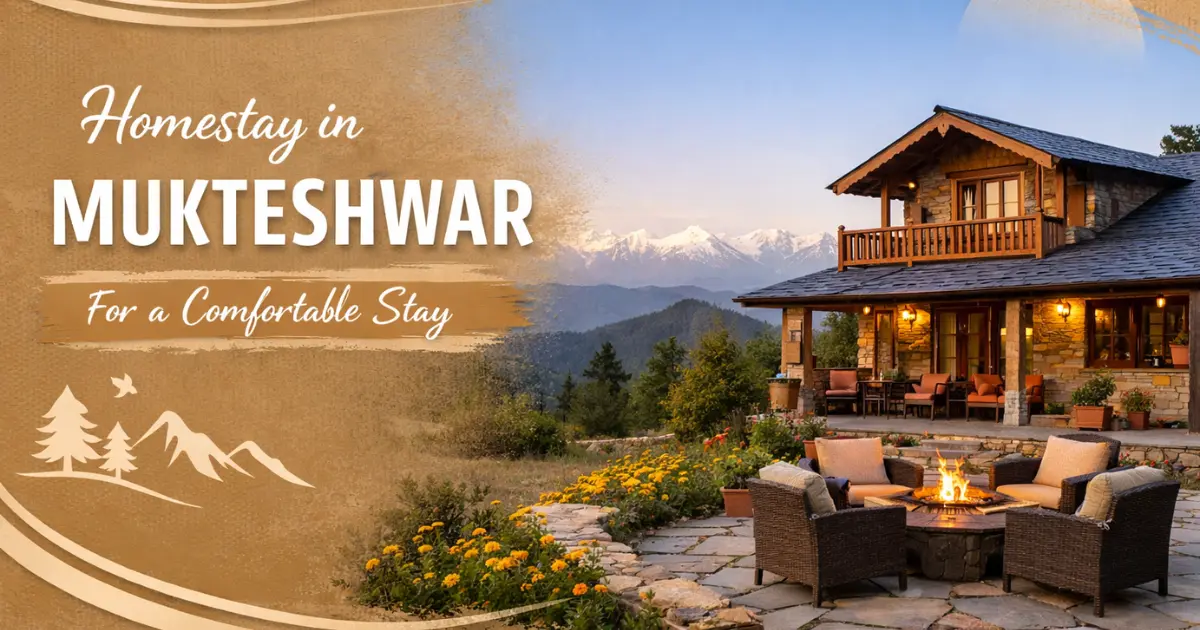
Now comes the bookings. May, June, and October are peak months. Places like Nainital and Rishikesh fill up fast. It is highly recommended that you book your homestay well in advance. If you are going to Jim Corbett National Park, then safari bookings start 45 days in advance. To get the best slots, make sure to book at the very first. Families who plan last-minute miss out on the best experiences.