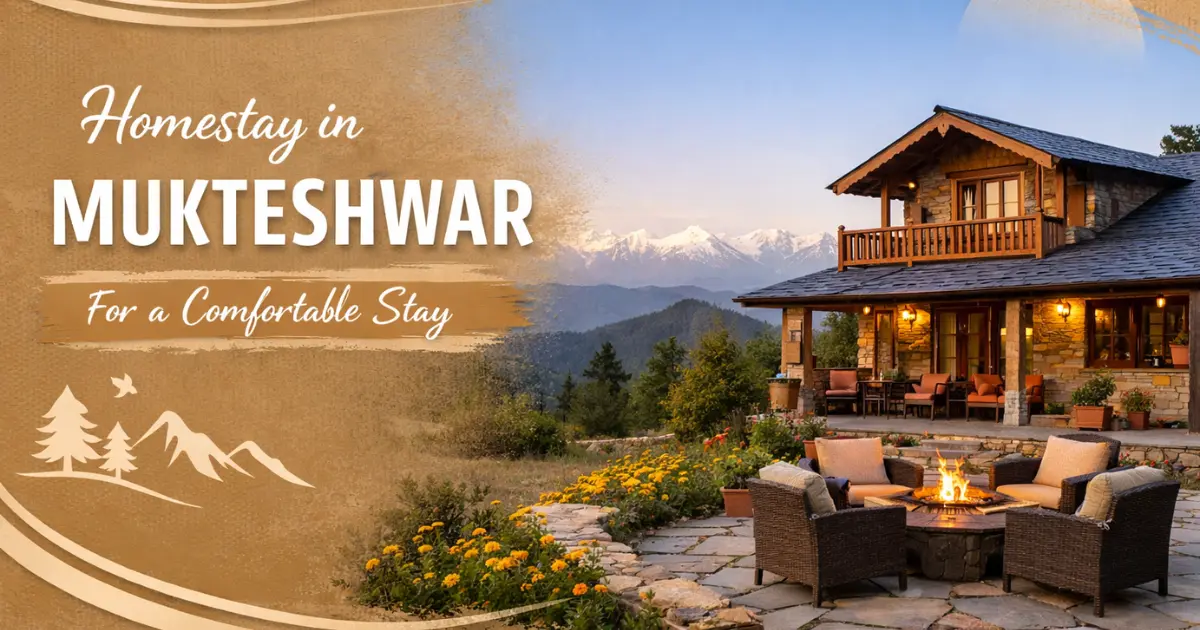

Most visitors leave Mukteshwar feeling like they have seen it. They visit the famous viewpoint, stay at a comfortable property and click photos with the Himalayas in the background. And yes, those moments are beautiful. But they often miss the things that make Mukteshwar truly different. The quiet orchard trails running beside the roads and evening fog that appears over the same ridges before slowly moving into the valley. They fail to enjoy the seasonal beauty when they visit the place in the odd seasons.
That’s the side of Mukteshwar most people drive past. Mukteshwar is called the Apple Country of Kumaon for a reason. It’s not just a catchy name. The town sits at around 2,286 meters in the Kumaon hills, where the altitude, weather, and local conditions create an ideal environment for growing apples, pears, and plums. The orchards here are not just a scenic backdrop. They are part of the identity of the place.
A big reason behind this agricultural history is the Indian Veterinary Research Institute, established here in 1893. The surrounding land was developed for research and farming, which helped create the older, more established orchards you see around Mukteshwar today. These trees have been here for years. You can feel that when you walk past them. They don’t look like newly planted tourist attractions. They feel rooted and connected to the landscape.
But here’s what makes Mukteshwar interesting. The orchards explain where the place comes from. They don’t fully explain why people fall in love with it. The real charm of Mukteshwar is in the slower moments, the walks, the changing light, the quiet roads, and the feeling that the mountains are still allowed to exist without too much noise around them.
Mukteshwar is not Nainital. That needs to be said early, because travelers who arrive with Nainital expectations consistently leave disappointed or confused. There's no lake, no cable car, no bustling mall road, no queue of vehicles on a Saturday afternoon. What there is instead is a small hill town that knows exactly what it offers and offers it without ceremony.
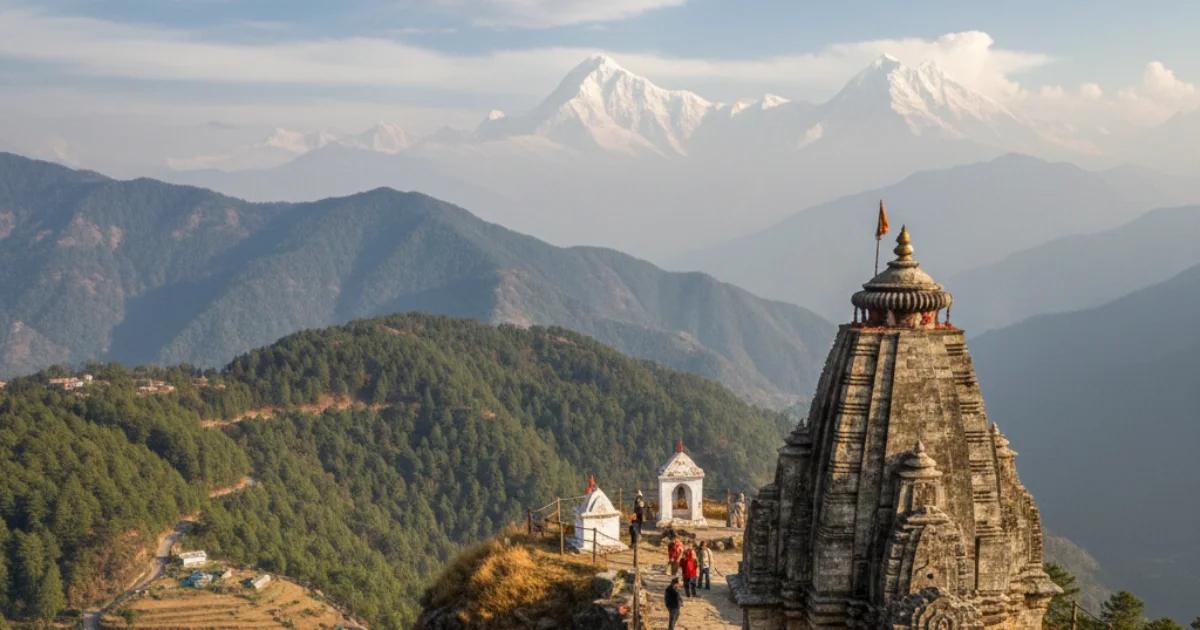
The story of Mukteshwar starts at the top of the town. Its name takes on the ancient Mukteshwar Dham Temple that is dedicated to lord shiva. It is perched at one of the highest points in the region. It is a century old shrine and it dictates the atmosphere around. Mukteshwar dham is a peaceful place where you can experience slow mornings, local pilgrims and the surroundings are free of public rush. Unlike crowded pilgrimage destinations you see less pilgrims here but with firm faith. Morning is the best time to visit the place that is around 7 a.m.
That’s when Mukteshwar feels most authentic. The air is cooler. The incense rises quietly. Birds fill the silence. And the Himalayan views appear clearer before the day’s haze begins to settle in. It feels simple. Almost untouched.
If you want to see Mukteshwar at its calmest, don’t rush here. Come early. The mountains are always there, but the morning version of Mukteshwar is something you experience only for a few hours. That rhythm, early morning belonging to the place itself, the rest of the day shared with visitors, is what most Mukteshwar travel guides fail to map, because they're not written by people who've watched it happen over seasons.
Mukteshwar is one of the oldest apple-growing regions in Uttarakhand. It has a cool climate, fertile mountain soil and ideal conditions for growing apples. In the british era orchards began spreading more across the hills of this Kumaon state. Over time it became an important commercial crop and part of the life of people living in the area. Today apple orchards have become deeply rooted into the landscape. When you drive through Mukteshwar you can spot apple trees tucked away in the forests and villages. In the late summer and early autumn trees become heavily laden with the fruits. The green and the red hues mixing together gives an iconic view to the observer.
Apples grown in the Mukteshwar are known for their crisp and red texture. They have a balanced sweetness and fresh mountain flavour. When you walk through the orchards you can feel the freshness in the air. You can find orchard view cottages here and enjoy fresh local produce. This type of charm is rarely available in other commercial hill stations. The region feels more like a working agricultural community with deep agricultural roots.
Apple varieties here include Royal Delicious, Red Delicious, and local cultivars that don't travel well enough to reach Delhi markets intact, which means the only way to taste them is to be here. That's not a marketing claim. It's simply the perishability of soft mountain fruit at its best. Plum and pear orchards fill in the gaps between apple trees, and in spring, March and April, the whole belt blooms white and pink in a sequence that has been drawing painters and photographers to Kumaon for well over a century.
Mukteshwar–Ramgarh road, which gets vehicle traffic. It's on the older paths that connect the farming settlements above and below the road. Local families use these routes. The walk can take two to three hours to move between orchards and terraced fields. During the walk you can also come to the occasional view points and feel entirely unlike anything on the standard tourist circuit. These are some of the best orchard walking routes that tourists often miss when they remain restricted to the main areas.
Orchard walk is considered the best in August to October for fruit on the trees and march through April for the flowering. The trees are beautiful and best suits for landscape photography. You cannot experience the sensory richness of the fruit season.
Uttarakhand Darshan a "viewing" or "vision" of Uttarakhand is a phrase used loosely to describe the fuller experience of what the state has to offer beyond its famous pilgrimage circuit. Most people associate Uttarakhand with Haridwar, Rishikesh, Kedarnath, and Badrinath. That association is correct but incomplete. The Kumaon division, which covers the eastern half of the state and includes Mukteshwar, Nainital, Almora, Kausani, and Ranikhet, represents a quieter, more livable face of Uttarakhand, a region where villages are still farming, forests are still intact, and the cultural fabric hasn't been reorganized entirely around pilgrimage economics.
Mukteshwar sits within this Kumaon identity naturally. The IVRI campus, which is still an active research institution and employs local scientists and staff, gives the town an educated, settled character that pure tourist destinations don't have. There are families here who have lived in these hills for generations, who can tell you which orchard produces the best fruit by microclimate, which trail goes where, and which month the particular bird you're looking at returns. That knowledge doesn't appear in any travel guide.
Along with this, the Himalayan views from Mukteshwar offer wonderful mountain viewpoints. These types of mountain views are not present in himachal pradesh. Then comes the Kumaon hills that offer a wider and more open perspective. Here the mountains are spread out rather than stacked one behind another. On a clear day, you can see some of the most iconic peaks in the region that as follows:
Mukteshwar sits high above much of the valley haze, and the landscape leaves very few obstacles between you and the mountains. Due to this, you can get a rare kind of himalayan view. It looks wide, clean, dramatic and uninterrupted. In October you get an impressive view in the morning. The air looks highly clearer and sharper. Snow covered peaks look incredible and breathtaking. This makes Uttarakhand one of the most accessible himalayan destinations. You see them in a vast, open and unforgettable way.
That's the Uttarakhand darshan that Mukteshwar specifically offers: not just a mountain view, but the whole picture, orchards, village life, ancient temple, forest walks, and a landscape that still feels like it belongs to the people living in it rather than the people passing through.
Autumn is when the two best things about Mukteshwar happen simultaneously. The apple harvest is still active in early October, bins of freshly picked fruit outside farmhouses, the smell of pressed fruit in the air in the production areas, the orchards at their most loaded. Simultaneously, the post-monsoon atmosphere delivers the clearest Himalayan visibility of the year, with sharp morning views that photographers plan their entire trips around. If there's a single window where Mukteshwar is most fully itself, it's the first three weeks of October.
Spring is the second-best answer. The orchards bloom before anything else, starting in early March with plum, then pear, then apple — a rolling sequence of white and pink flowers across the hillsides that transforms the same landscape that was bare and cold a month earlier. The crowds haven't yet arrived, the air is still cool, and the trails through the orchard belt are at their most inviting.
Summer is the most visited period, for obvious reasons. Delhi and the plains heat up, and Mukteshwar stays cool. The orchards are green but not yet fruiting. Accommodation books out weeks in advance for weekends. It's a perfectly fine time to visit, but it's the version of Mukteshwar organized most around visitors rather than the place itself.
Monsoon split opinion. The forest deepens to a green that has no equivalent in any other season. The waterfalls at Bhalu Gaad run at full volume. The mountains disappear into clouds for days at a time, which frustrates some visitors and delights others. Orchards begin their fruit cycle in August and September. For travelers who find the mist beautiful rather than disappointing, and whose schedule bends to weather, this is an underrated window.
Winter is the season most travelers avoid and the one that rewards the ones who don't. The orchard trees are bare and structural. The town empties significantly. Snowfall is possible, sometimes occurring overnight and settling on the ridges and roads before the sun reaches them. The Himalayan views on clear winter days are extraordinary, with the post-monsoon atmospheric residue fully gone and the peaks at their most defined. A winter camping night in Mukteshwar, under a sky that has no light competition for kilometers in any direction, is not the same experience as any other season here.
The town itself is small enough to navigate on foot from most accommodations. The main market, the IVRI gate, the road toward Chauli Ki Jali, and the orchard paths above Sitla village are all within walking distance of each other if you're based centrally.
Driving the Ramgarh circuit, Mukteshwar to Ramgarh to Dhanachuli to Peora and back, takes two to three hours by road and covers the heart of the orchard belt. It's best done in the morning when the light is directional and the views are clear. By afternoon the return stretch along the ridge road tends to cloud over, which is fine if you don't mind driving in mist but frustrating if the view is your primary goal.
The Mukteshwar–Nainital road is 51 kilometers and takes about 90 minutes in good conditions. It's a useful access point if you're combining both, but traveling it specifically to compare the two is a mistake, they're different places serving different purposes, and treating either as a better or worse version of the other misses what each one actually is.
One practical reality worth flagging: Mukteshwar has limited ATM access, and the ones that exist sometimes run dry during peak visitor weekends. Arriving with sufficient cash for your stay is not overcaution, it's just how the town works, and it's been true long enough that it's a feature of the place rather than a bug being fixed.
The fog behavior in Mukteshwar is specific and worth understanding. The valley fog builds through the afternoon and typically reaches the lower ridgeline between 4pm and 5pm, depending on the season and humidity. On clear days, it stays below the viewpoints entirely. On heavier days, it fills the upper road by evening. Watching this movement, standing at the Chauli Ki Jali edge as the fog approaches from below, backlit by the afternoon sun, is one of the more quietly spectacular things the area offers, and it happens on its own schedule without any arrangement required.
The IVRI campus itself, while primarily a research institution, borders some of the most productive birding habitat in the Mukteshwar area. The oak and pine forest along the campus edge holds species that the more visited trails don't reliably produce, Khalij pheasant in the early morning undergrowth, several laughingthrush species, and in winter the forest filling with species pushed down from higher elevation. You don't need to enter the campus for this; the forest tracks running parallel to its boundary are enough.
The weekly market, when it runs, brings the farming community into town in a way the rest of the week doesn't show. Seasonal produce, local goods, the particular social rhythm of a hill town that still functions on its own terms rather than tourist terms. The timing varies and is worth confirming locally, but if it falls during your visit, it's the most honest version of Mukteshwar available to an outsider.
Mukteshwar doesn't ask to be understood quickly. It unfolds over days rather than hours, and the people who get the most from it are usually the ones who arrived planning to stay one night and extended without thinking too hard about why.
The orchards, the views, the temple, the fog, the fruit, none of these are things you tick off a list. They're things you find yourself present for, if you slow down enough.
That's the darshan Mukteshwar actually offers. Not a tour. A conversation with a landscape that has been here longer than any of us, and will be here long after the visit ends.