Mukteshwar’s Temples and viewpoints aren’t about seeing more. They’re about exploring at the right time. Most people arrive in Mukteshwar with a checklist. A temple, a cliff, a sunset, maybe a photograph to prove they were here. What they miss is that this place doesn’t reward speed. It rewards timing, patience, and a slow pace. Hills in Mukteshwar change their mood quietly through the day. A viewpoint that feels ordinary at noon can feel almost private just after dawn. A temple that seems crowded in the afternoon settles into something older and calmer once the fog lifts and the day visitors drift back down the road. If you understand that rhythm, Mukteshwar opens up and delivers you a beautiful travel experience. So this blog provides you with the best tips to explore and experience Mukteshwar`s Hilltop Temples hassle-free and enjoy the best of your time. Keep reading and plan your trip effortlessly!
Mukteshwar’s temples weren’t built on hilltops for views alone. They were placed where sound carries differently, where the wind moves more slowly through the trees, where silence feels intentional rather than empty. That’s also why many viewpoints sit beside temples, not apart from them.
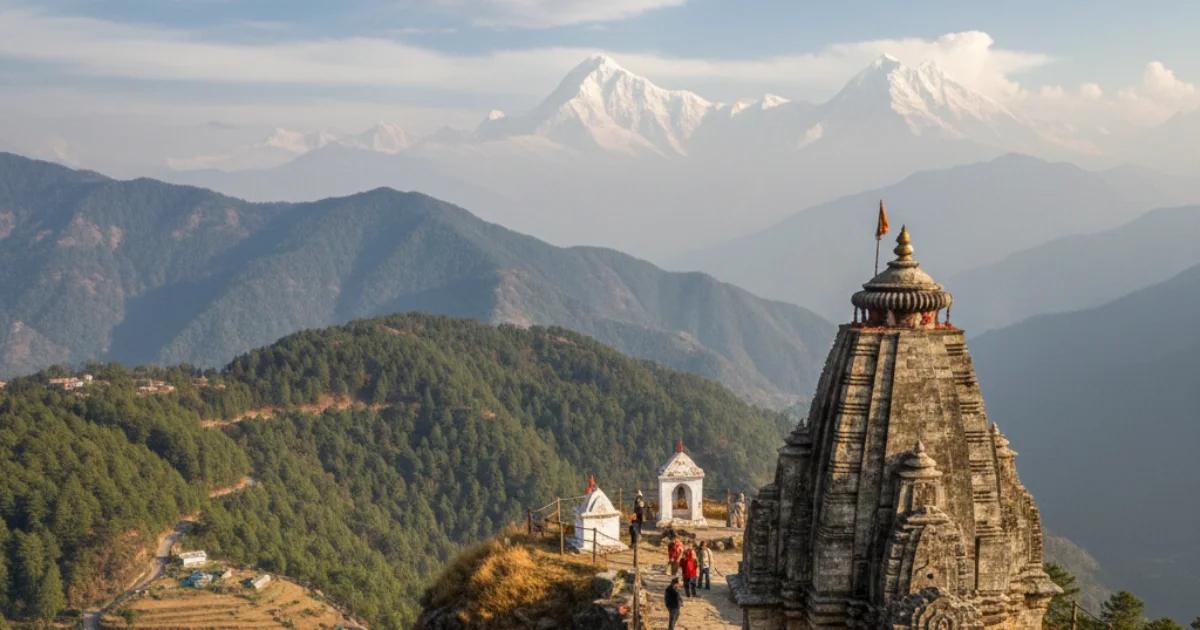
Mukteshwar Dham sits at the town’s highest point, and not by accident. It sits where it does for a reason locals don’t usually explain. The sages understood this terrain well. Silence holds better on ridgelines. The wind moves cleaner. Thoughts settle faster. Over time, what were places of meditation became natural lookout points, not because they were designed that way, but because the land allowed it.
At Mukteshwar Dham, early in the day, before the road wakes up, the air feels sharper there. Bells sound softer, not louder. By mid-morning, bells blend with voices and footsteps. But earlier, when the air is still sharp, and the road is quiet, you hear more wind than prayer. Step past the temple toward the cliff edge, and the mountains reveal themselves only if the sky is clear, and some days, they don’t.
Chauli Ki Jali works the same way. It’s dramatic, yes, but also exposed. Midday crowds flatten the experience. Early light, before the valley warms up, is when the place feels balanced, powerful without being noisy. And yes, the edges are steep. People lean too far. Every season, someone misjudges that.
The smaller temples don’t announce themselves. They sit along bends in the road, near village paths, half-hidden by trees. No signage, no rush. You’ll notice them when the road suddenly feels quieter than it should.
People often ask for the best time to visit Mukteshwar. The more useful question is what kind of quiet you’re looking for. If clear views matter, spring and early autumn behave best. March to June brings steady mornings and forgiving temperatures. September to November clears the air after the rains and stretches visibility across the ranges. On clear days, the Himalayan range stretches wide, with Nanda Devi anchoring the horizon. But Mukteshwar doesn’t put on a show every day. Some mornings offer nothing but clouds and trees. That unpredictability keeps the place honest. Unlike busier hill stations, there’s no constant crowd waiting for the moment.
Winter is quieter, and that silence comes with trade-offs. Fog lingers longer. Roads stay damp. On a clear winter morning, though, the Himalayas feel closer, sharper somehow. When the mountains appear here, they feel personal, almost private. You’ll want layers and plans that need to stay flexible. So does accepting that not every day will give you what you came for.
Monsoon turns Mukteshwar inward. July and August soften everything—the trails, the sounds, the pace. The hills turn intensely green, but movement slows. Temple paths get slick, visibility drops without warning, and views come in fragments rather than wide frames. This season suits travelers who don’t mind waiting, watching, and shortening their plans without frustration.
Across all seasons, one thing remains constant: the early morning hours set the tone for the day. Temples breathe easier just after sunrise. Fog lifts unevenly. Roads stay quieter. Even on average days, those first hours hold the clearest sense of why people come here at all.
Mukteshwar’s temples aren’t arranged for convenience. They’re placed where the land allows stillness to settle. Some draw attention simply because they’re easy to reach. Others stay quiet because they ask a little more from you. If you wake up early without resentment, sunrise near Mukteshwar Dham or Chauli Ki Jali makes sense. Light moves fast here. Miss it by twenty minutes and the moment’s gone. Sunsets suit slower travelers. Valleys hold color longer in the evening, but expect company. Arrive early, stand back from the obvious ledges, and let others crowd the edges if they want the photograph more than the pause.
Mukteshwar Dham sits at the town’s highest point, which explains both its pull and its problems. It’s old, older than the road that leads to it, and the stories around it are woven into how the town understands itself. Liberation, silence, elevation. The themes repeat.
Early in the morning, before the shops open and the first cars arrive, the place feels held together. Bells don’t echo; they settle. Incense drifts instead of clinging. On clear days, the Himalayas appear in layers beyond the courtyard, not all at once, but gradually.
By late morning, the mood shifts. Voices carry. The pause disappears. If you’re not there early, it’s better to keep moving. The short path beyond the temple, toward the cliff edge, is where the calm lingers longest.
Chauli Ki Jali looks dramatic because it is. The cliff drops away sharply, the valleys open wide, and the wind rarely rests. Legends cling to the rock faces, but the place isn’t gentle.
Sunrise suits it best. Light hits the stone cleanly, crowds haven’t arrived, and the space feels balanced rather than performative. By sunset, people gather quickly, often forgetting how close the edges are. Every season, someone stands too far forward.
Take the warning seriously. The ground is uneven, the drop is real, and the experience doesn’t improve by testing it. Stand back. Let the view come to you.
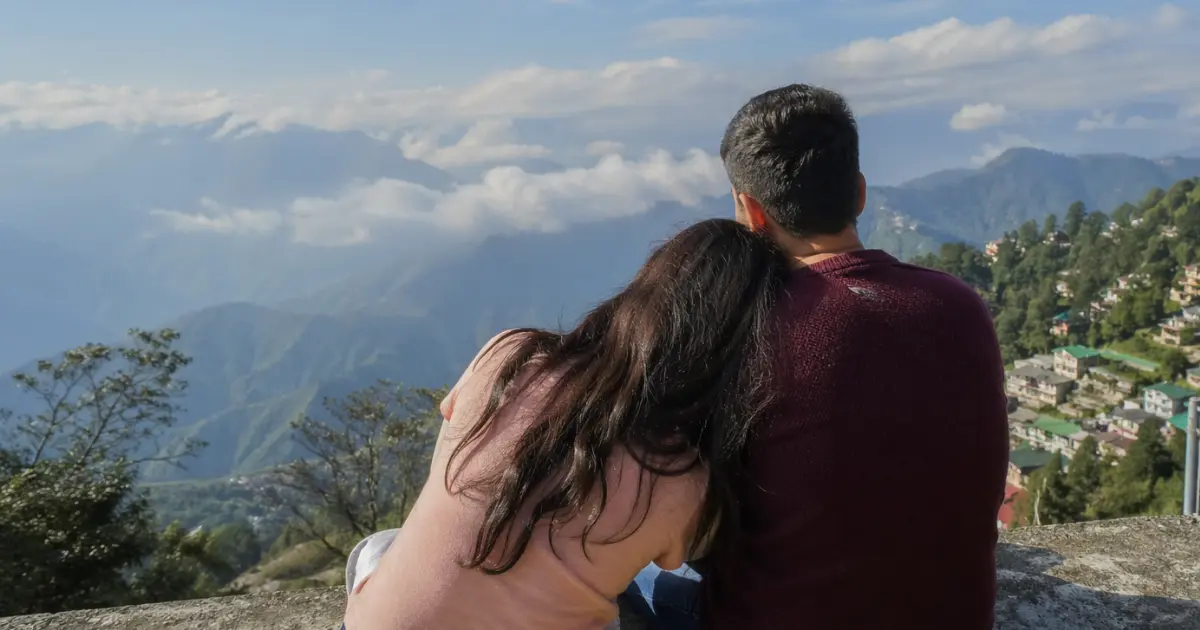
For those who value quiet over angles, the best viewpoints often go unnamed. They sit along forest roads where the trees suddenly thin out. No railings. No boards. Just enough space to stop, breathe, and move on. Couples usually enjoy these unmarked spots more than families. Families do better near accessible viewpoints with space to stand back. Repeat visitors stop chasing peaks altogether and start watching how light moves through the valley instead.
Mukteshwar gives you wide skies almost everywhere. What it doesn’t give easily is the right moment. The difference between an ordinary view and a memorable one here often comes down to an hour, sometimes less. People talk about viewpoints as locations. Locals think of them as windows.
Morning belongs to Mukteshwar. Before the roads wake up and before the valleys heat up, the air stays clear and the hills feel steady. Areas around Mukteshwar Dham and Chauli Ki Jali catch the first light cleanly. The mountains don’t light up all at once; they warm slowly, moving from pale grey to soft pink, then gold.
Fog behaves differently at dawn. It lifts in layers rather than swallowing the view whole. Crowds haven’t arrived yet, and the sound stays low. This is when people sit without checking the time, photographers, yes, but also those who simply understand that the day doesn’t need to start loudly. If you value calm more than comfort, this is the hour to step out.
Evenings draw people out. The light turns generous, valleys deepen in color, and the sky lingers longer than expected. Popular sunset spots do what they’re meant to do: they gather attention.
Arriving early matters. Not for the view, but for space. Standing back from the obvious ledges makes the experience easier and safer. The best part of sunset isn’t the color itself; it’s the pause just before it fades, when conversations drop, and the hills seem to settle for the night.
If you’re traveling with family or prefer a slower pace, sunset fits better than sunrise. Just expect the company.
The most honest views in Mukteshwar aren’t marked. They appear along forest roads, near village turns, or where the trees briefly open up without warning. These spots don’t offer railings or wide platforms. They offer space, enough to stop, enough to breathe, enough to move on when the moment passes. Often, they’re no more than a short walk from the road, but they stay empty because nothing announces them.
If solitude matters more than photographs, this is where you’ll linger longest. Wind in the pines, a single bird call, the valley stretching out without commentary.
Mukteshwar doesn’t need grand stages for its views. It rewards those who wait, arrive early, or choose the path that doesn’t advertise itself.
Mukteshwar doesn’t test your driving ability. It tests your patience. The roads here were never meant to be hurried. They curve with the land, narrow without warning, and reward those who let the hills set the pace. Most temple roads are in decent shape, but steep and blind turns mean momentum matters less than judgment.
Mornings work in your favor. Light is cleaner, traffic is lighter, and fog hasn’t yet decided where to settle. Evenings, especially in winter, change the equation. Visibility drops fast, temperatures follow, and the same road that felt easy at noon can feel unfamiliar an hour later. So, cannot predict what comes next, but you can get along conveniently once you are there.
Mobile signals come and go without apology. Maps help, but they don’t replace local sense. A single wrong turn here doesn’t always look wrong until you’ve gone too far. Hence, it would be better to ask once, early, to save time.
improvising on narrow shoulders. You can avoid parking issues by arriving at the place earlier and booking your parking. From most parking areas, expect to walk. Paths are short but uneven, sometimes damp, occasionally steeper than they appear. You should put on shoes that offer good grip more than style.
Weather shifts quietly in Mukteshwar. Monsoon makes the roads slick and the paths soft. Winter brings fog that settles without warning and wind that feels sharper than the temperature suggests. You should move slowly and leave space. Give yourself more time than the distance suggests. When you do, getting to Mukteshwar’s temples and viewpoints starts feeling like part of the journey.
You don't need to do preparations at grand scale. Mukteshwar doesn’t ask for much, but it notices when you come unprepared. When you carry just enough, the hills feel lighter, and so does the day. Distances are short here. Conditions aren’t. A clear morning can turn sharp by evening, and a gentle-looking path can feel different once moisture settles into the stone. A few thoughtful choices make the day easier.
Footwear comes first. Forest trails, temple steps, and stone paths don’t forgive smooth soles. Shoes with real grip matter, especially after rain or during winter when dampness lingers longer than expected. Most slips here happen not on long hikes, but on short, familiar-looking walks.
Layers solve more problems than forecasts. Even in summer, mornings carry a chill that fades slowly. Evenings bring it back. A light jacket or shawl rarely feels unnecessary. From December onward, warmer layers aren’t optional; wind moves freely across ridges.
Water is non-negotiable. Shops don’t sit where views open up, and early mornings don’t wait for cafés to open. A bottle and something small to eat keep the pace relaxed rather than rushed.
Phones work on their own terms here. Signals drop without warning and return just as casually. Offline maps help. A charged phone helps more. A power bank saves you from choosing between navigation and photographs.
Sun protection surprises people. The light feels soft, but the exposure isn’t. A cap, sunglasses, and sunscreen earn their place quickly.
Carry everything in a small backpack. Hands stay free. Balance improves. Near cliffs and uneven ground, that matters more than comfort.
Homestay in Mukteshwar isn’t just about a bed and a view. It quietly determines whether your mornings feel rushed or unforced, whether evenings feel like recovery or continuation. Distances here look short on a map. They don’t feel that way after fog, traffic, or a missed turn.
Hence, staying near the town center keeps things practical. Places around Mukteshwar Dham and the main road make early starts easier and late returns less complicated. You step out, and you’re already close to where the day begins. Less time navigating narrow lanes means more time walking, sitting, or simply watching the light change.
The Trident Stays, a hilltop cottage in Mukteshwar, offers something different. They trade convenience for calm. These places wake up earlier than the town does. Sunrises arrive at your window before they reach the road below, and evenings settle into quiet without much effort. They suit travelers who move slowly and don’t mind an extra turn or two if it buys them silence.
Parking is an underestimated luxury here. Viewpoint spaces fill quickly, and reversing on narrow slopes isn’t anyone’s idea of a good morning. A stay with proper parking removes that friction. Even better is a host who can tell you which temple feels busiest after breakfast, or which path stays dry after rain. That kind of guidance doesn’t show up online.
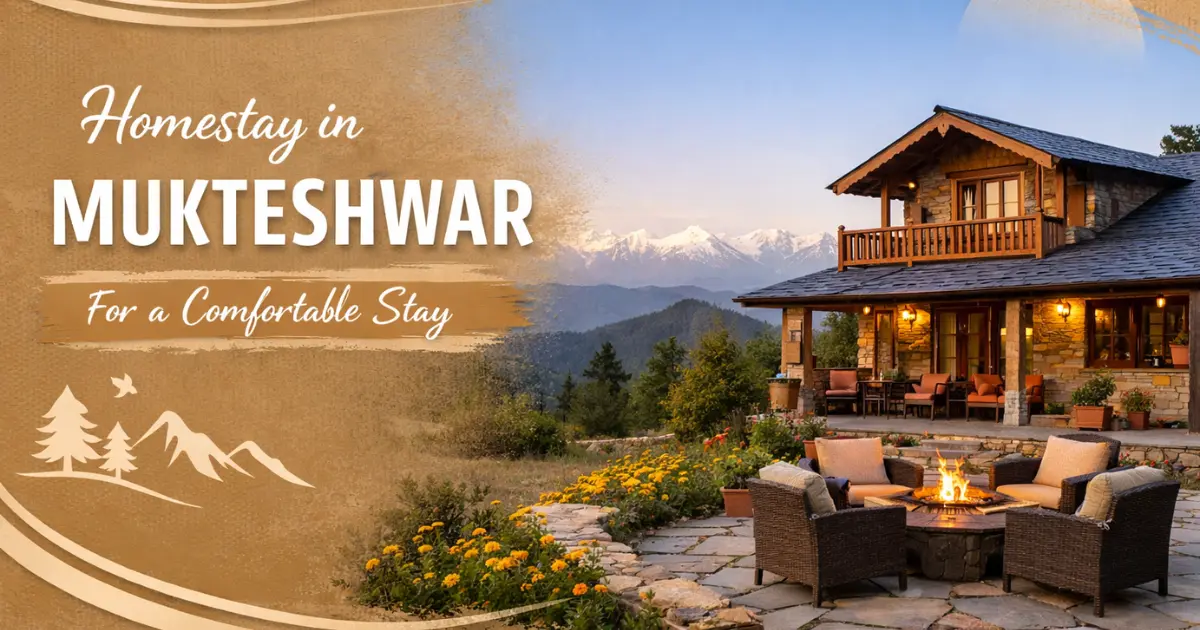
After a day of hills and steps, comfort stops are optional. Warm rooms matter. So does hot food at the right hour, especially for early risers. Outdoor seating, a fire in the evening, somewhere to sit without doing anything at all, these details decide how rested you feel the next day. Homestays offered by The Trident Stays work well, not because they try to impress, but because they understand the rhythm of Mukteshwar.